School shooter gets a break
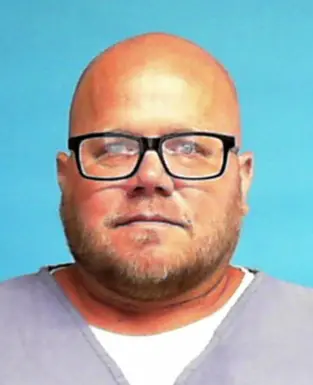
LAKE COUNTY, FLA. – School shootings were rare 30 years ago, so when 14-year-old Keith Johnson, 14, shot a fellow student to death in a hail of bullets the sentencing judge said he could have also been convicted of robbery, “because you have robbed this community of its innocence.”
Circuit Judge Don Briggs sentenced him to life without parole, but because of a built-in “innocence” due to his then still-developing brain, his sentence has been reduced to 40 years and three years’ probation. Experts now say brain development continues up to the age of 25.
I covered the case and wrote about it in my book, Vampires, Gators and Wackos, A Florida Newspaperman’s Life.
Johnson gets a break thanks to a couple of high court rulings, Miller v. Alabama (2012) and Falcon v. State.
A reduced sentence is not guaranteed. A judge said no to vampire cult murderer Rod Ferrell in a 2024 appeal. He was convicted of killing a cult members’ parents in Eustis in 1996. A judge said yes, however, to codefendant Howard Scott Anderson with a 40-year sentence. Anderson is not the one who brought the crowbar down in the bludgeoning deaths of Ruth Queen and Richard Wendorf, and he pleaded guilty.
I wrote about this case in Cold Blooded, A True Crime Case of a Murderous Teen Vampire Cult
The issue is whether the court believes the defendant can be rehabilitated or is incorrigible.
Senior Judge Lawrence Semento weighed the pros and cons in his sentencing memo in April.
“Joey Summerall’s killing shattered his family. His cousin, who helped raise him, noted she thinks about Joey’s murder every day and how badly this has affected Mr. Summerall’s mother, who passed away in 2019.”
He also noted how the incident traumatized students and teachers alike at Tavares Middle School when the shots rang out in 1995.
Johnson immediately confessed. He told classmates on his bus that he was going to jail “for murder one,” asked them who they would like to see killed,and showed the 9 mm handgun to a girl.
Johnson claimed he was in fear for his life. Witnesses said Joey was a mouthy, rambunctious character, not a threat.
A psychiatrist testified about Johnson’s turbulent home life: an alcoholic father that was gone for a time, then returned emotionally distant. His mother loved him but was gone a lot in her nursing job. Johnson later claimed he was physically abused by his father.
Because of issues at school, his mother placed him in the home of a friend, who had been paralyzed in a shooting. Johnson stole the gun from the man.
Judge Semento cited brain development and immaturity issues raised in Supreme Court rulings. “…scientific evidence is well-documented that those parts of a juvenile’s brain that control behavior, including the frontal cortex, are not fully developed and continue to mature into early adulthood. In making behavioral choices, adolescents rely more heavily on areas of the brain that promote risk-taking behaviors. Most likely, childhood stress factors and experiences present in Mr. Johnson’s adolescent years had a negative effect on his brain development.”
The judge noted that Johnson had taken several classes and entered programs to improve himself and did not have a history of violence in prison.
The case was incredibly sad.
When a reporter asked the prosecutor if he was happy with the jury verdict, he said: “What is there to be happy about? A 15-year-old was on his way to prison for the rest of his life and another child was dead.”
Johnson was captured in a nearby orange grove and asked by a state attorney investigator if he had any remorse.
“Have any what?”
“Remorse.”
“What’s that?”
“What does that mean? Do you feel sorry for what you have done now?”
“Yeah. Because I could have just walked away.”
Public Defender Mike Graves represented Johnson. Thomas Weiscorek argued on behalf of the State Attorney’s Office.